

Some Heroes Drive Rickshaws
It was early morning in Karachi, the kind of morning where the streets still yawned, not fully awake.

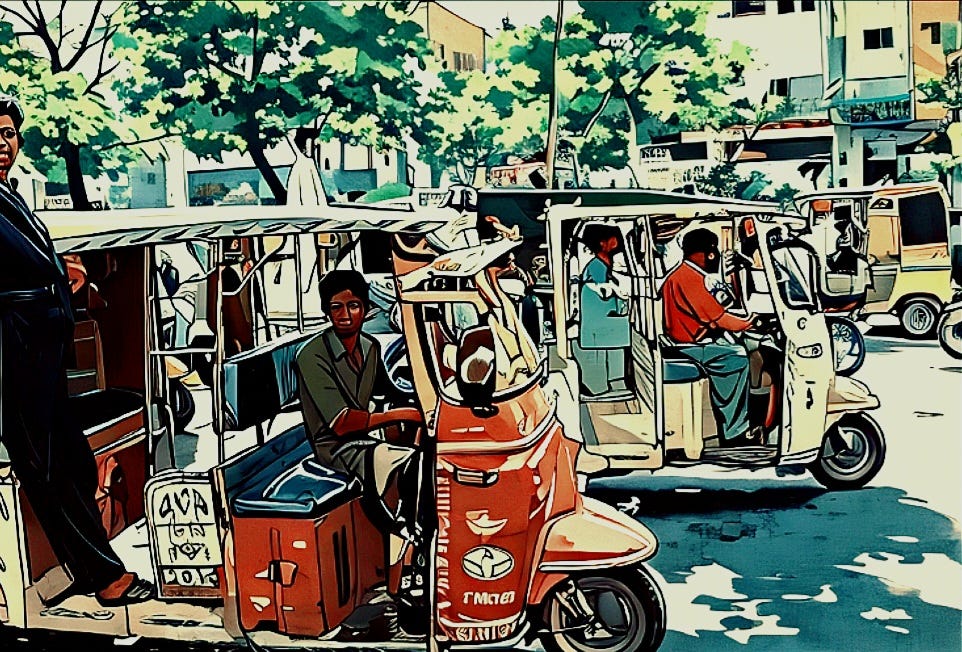
I was 14, sitting quietly inside a small café owned by a Pathan: a modest place with wooden benches, the clatter of metal cups, and the comforting smell of parathas and strong chai.
As I sipped my tea, I noticed a young boy maybe 7 years old, barefoot, clothes worn thin, walking table to table, quietly asking for something to eat. He wasn’t loud, just desperate. People ignored him. Some shook their heads, others gestured for him to move along. Well-dressed men buried in their newspapers and conversations pretended not to see him.
Then a rickshaw driver, who had just walked in and hadn’t even ordered for himself yet, called the boy over. He looked like someone still waiting for his first fare of the day. And yet, without thinking twice, he reached into his pocket, pulled out a few crumpled bills, and handed them to the Pathan behind the counter.
“Usko nashta de do,” (Give him breakfast as well) he said softly. “Chai aur paratha.” (Tea and bread).
No performance. No audience. Just quiet, human kindness.
The Pathan nodded. The boy sat down at a corner table. He began eating like he hadn’t in days.
I just sat there, watching.
At 14, I finally understood what empathy looked like: not in words, not in speeches, but in action. It’s about seeing pain and choosing to act even when you have little yourself.
I often think of that rickshaw driver, how he looked at that boy and saw a human being.
Now, many years later, I realize the depth of what I learned that day: some acts of kindness are so pure that they set a standard for the rest of your life, a standard you can never fully live up to.